

Can Orchids Grow in Self-Watering Pots? Coco Chips, Setup, and Root Care
By Nathan Trowbridge · Mossari
Some orchids can grow in a suitable wicking setup, provided moisture and root aeration suit the particular orchid. A self-watering pot is not a reason to keep an orchid permanently waterlogged. Mossari’s orchid wicking planters are designed around chunky coconut husk chips, with the root zone above a water source.
Listen to this article
3 min 16 sec
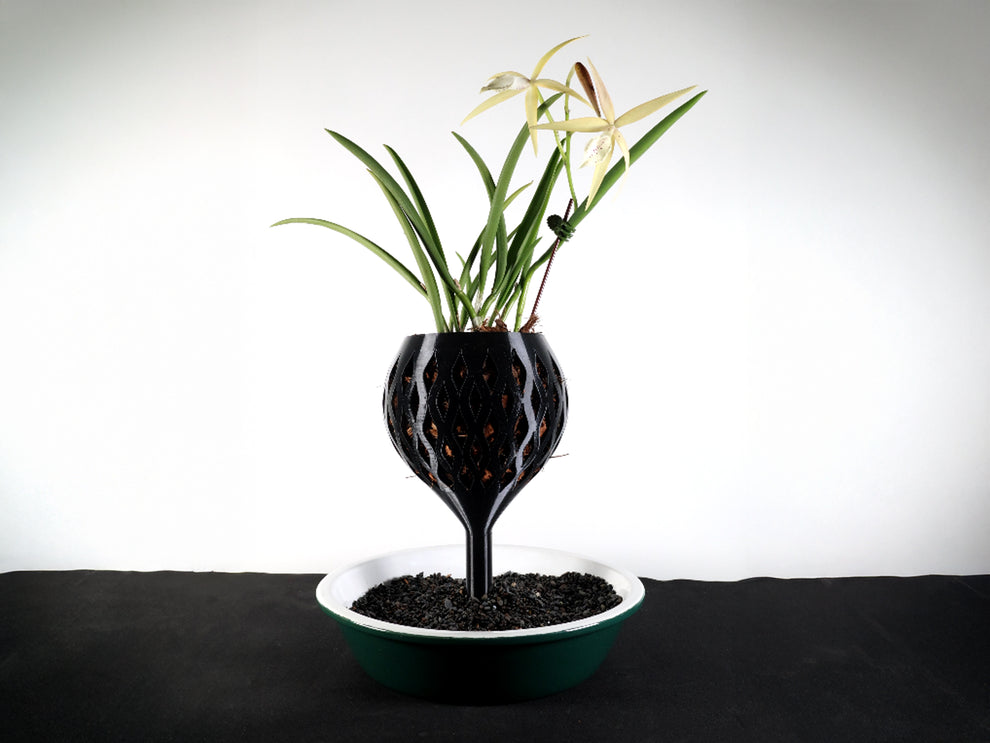
Which orchid pot should I choose?
The freestanding Orchid Wicking Pot sits in a bowl, jar, or suitable water vessel. The Orchid Aquarium Wicking Planter mounts on a compatible rimmed or rimless freshwater tank. Both use a wick to bring moisture into the media; neither is intended to submerge the orchid’s crown or whole root zone.
Which orchids are sensible starting choices?
A healthy Phalaenopsis or miniature moth orchid is a practical place to assess this system. Match chamber size to the roots and keep the plant in suitable light. Do not assume all Dendrobium, Oncidium, or other orchids share the same watering cycle. Some species need seasonal changes or a drier rest and may be unsuitable for constant wicking.
The American Orchid Society’s Phalaenopsis care sheet offers species-focused guidance. Identify your orchid first, especially if you are unfamiliar with its care.
Why does Mossari use coco chips?
Mossari Orchid Substrate is 100% coconut husk chips. It is chunky rather than fine coir, providing a moisture-holding structure with spaces around roots. The orchid planters are designed for this medium.
Bark, moss, and coco chips behave differently, and none is universally best in every environment. Do not swap media and assume the same reservoir arrangement will work unchanged. The American Orchid Society’s coconut-husk guidance notes that chips are normally soaked in changes of clean water before use. Follow supplied preparation instructions outside the aquarium.
How do I set up an orchid wicking pot?
- Prepare the planter, wick, and chips according to the Mossari setup guidance.
- Choose a healthy orchid and inspect its roots. Gently remove loose old media without damaging firm roots.
- Support it in the chips, keeping the crown above the media and water.
- For the freestanding pot, choose a stable vessel with refill access. For the aquarium model, check the rim, lid clearance, and mounting components.
- Establish the intended wick contact with water and observe moisture around the roots closely.
How much orchid substrate do I need?
The current orchid substrate listing describes a 7-cup (1.65-liter) bag portioned to fill one Mossari Orchid Wicking Pot. The plant’s existing root ball changes the amount actually used. Avoid packing chips tightly merely to empty the bag.
How do I know if the roots are too wet?
Firm roots and stable leaves are more useful than assuming water in the reservoir means all is well. Soft, deteriorating roots or a sour, persistently saturated medium call for inspection. The American Orchid Society’s care basics emphasize avoiding standing water and unsuitable wet media. Adjust or discontinue wicking if your orchid’s roots do not tolerate the conditions.
Does aquarium water replace orchid fertilizer?
Not reliably. Tank water contains variable nutrients, and an orchid may need more than it supplies. Do not add ordinary orchid fertilizer to an aquarium containing animals. Assess nutrition in a way suitable for the entire setup and continue normal tank maintenance.
When should I replace coco chips?
Inspect their condition instead of treating a stated lifespan as a fixed schedule. Replace media that breaks down, compacts, carries problematic buildup, or no longer suits root health. Keep the crown dry, light appropriate, and roots accessible for observation.
A suitable wicking arrangement can simplify orchid care, but watching the roots remains part of the pleasure—and the practical work—of growing orchids.