

What Soil Should You Use in a Self-Watering Planter? Inert vs. Enriched Mix
By Nathan Trowbridge · Mossari
A self-watering planter needs growing media that move moisture from the wick while leaving air around the roots. The right mix depends on the plant and how you supply nutrients. Mossari offers an inert wicking mix, a smaller substrate bag, and an enriched blend for added root-zone nutrition.
Listen to this article
3 min 57 sec
Choosing between them is easier when you separate two questions: how will water reach the roots, and where will the plant’s nutrients come from?
What is the inert wicking substrate?
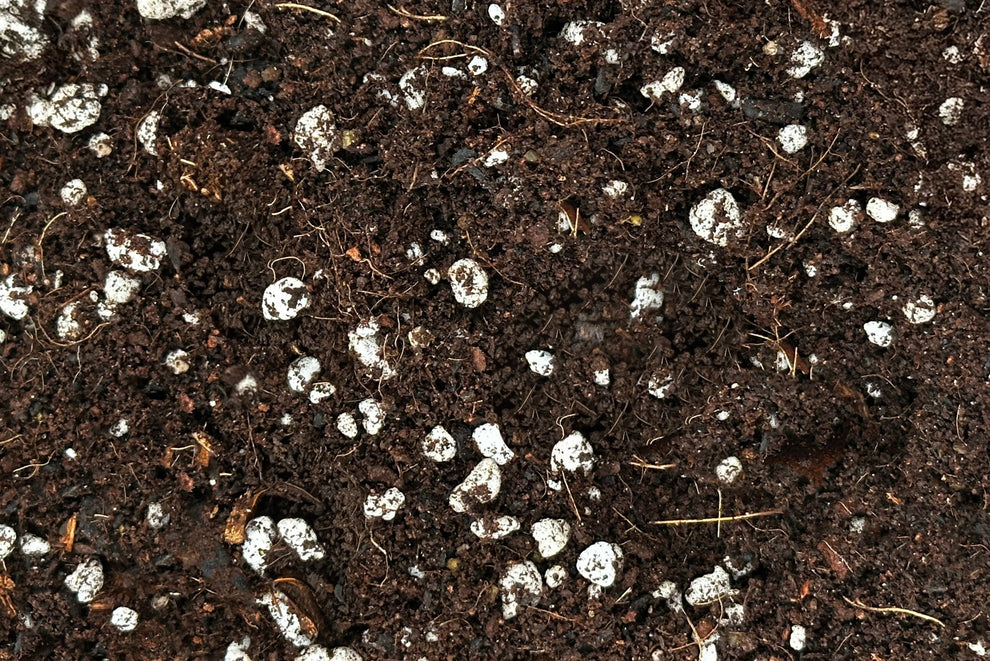
The 6-cup Mossari Inert Wicking Substrate contains coco coir, coco chips, and perlite, without added fertilizers or amendments. Coir holds moisture, while the chunky components help maintain an open structure.
“Inert” here means the supplied blend has no added fertilizer. It contains organic coconut materials; it is not the same as an entirely mineral growing medium. Plants still need a suitable source of nutrients.
What does the enriched blend add?
The 6-cup Mossari Enriched Blend lists coco coir, perlite, worm castings, kelp meal, neem meal, and gypsum. It offers additional nutrition in the root zone. It may suit growers wanting nutrient support during establishment or a setup where the water source supplies little.
Added amendments do not mean a plant never needs feeding again. Watch growth and follow a feeding routine appropriate to the plant and system. Do not assume nutrients remain adequate indefinitely.
Which should I use above an aquarium?
An inert blend lets the aquarium be the water and nutrient source without adding fertilizer in the supplied mix. An enriched blend supplies extra root-zone nutrition. Neither proves aquarium water will meet every nutrient need or that nutrients cannot move between parts of the setup.
Keep the mix inside the intended wicking chamber above the water. Do not pour these blends into an open in-tank basket or directly into the aquarium. Continue water testing and maintenance; avoid ordinary houseplant fertilizer in water containing aquatic animals.
Can I use regular garden soil?
Dense garden soil is a poor starting point for a continuously moist container. Water availability and root aeration need to work together. Illinois Extension explains the reservoir-and-wick principle of self-watering containers. Choose media suited to that arrangement and your plant.
Do I need the 3-cup or 6-cup bag?
- The 3-cup Small Wicking Pot Substrate Mix is portioned for one Mossari Small Wicking Pot.
- A 6-cup wicking blend bag is listed to fill one Large Aquarium Wicking Pot, one Large Freestanding Wicking Pot, or one Oasis planter.
- The 6-cup size can also fill two Small Aquarium Wicking Pots or two Soma planters.
These are planting-volume guides, not instructions to compress every bag into the chamber. An existing root ball occupies space. Check the selected planter’s current requirements before ordering.
Why is the mix wet at the bottom and dry at the top?
A moisture gradient can occur in wicking systems. Check moisture where the roots sit rather than judging by the surface alone. If the root zone is dry, inspect wick placement, reservoir contact, and media preparation. If it is persistently saturated and the plant declines, reassess the mix, packing, water level, and plant suitability.
What about LECA or orchids?
LECA is expanded clay with no added nutrients and different establishment needs. Mossari orchid wicking pots are designed around chunky coconut husk chips. Do not choose a dense fine mix for an epiphytic orchid simply because it wicks well.
Start with the plant, choose a suitable medium, and let your observations guide care. Watering and nutrition work best when considered together.